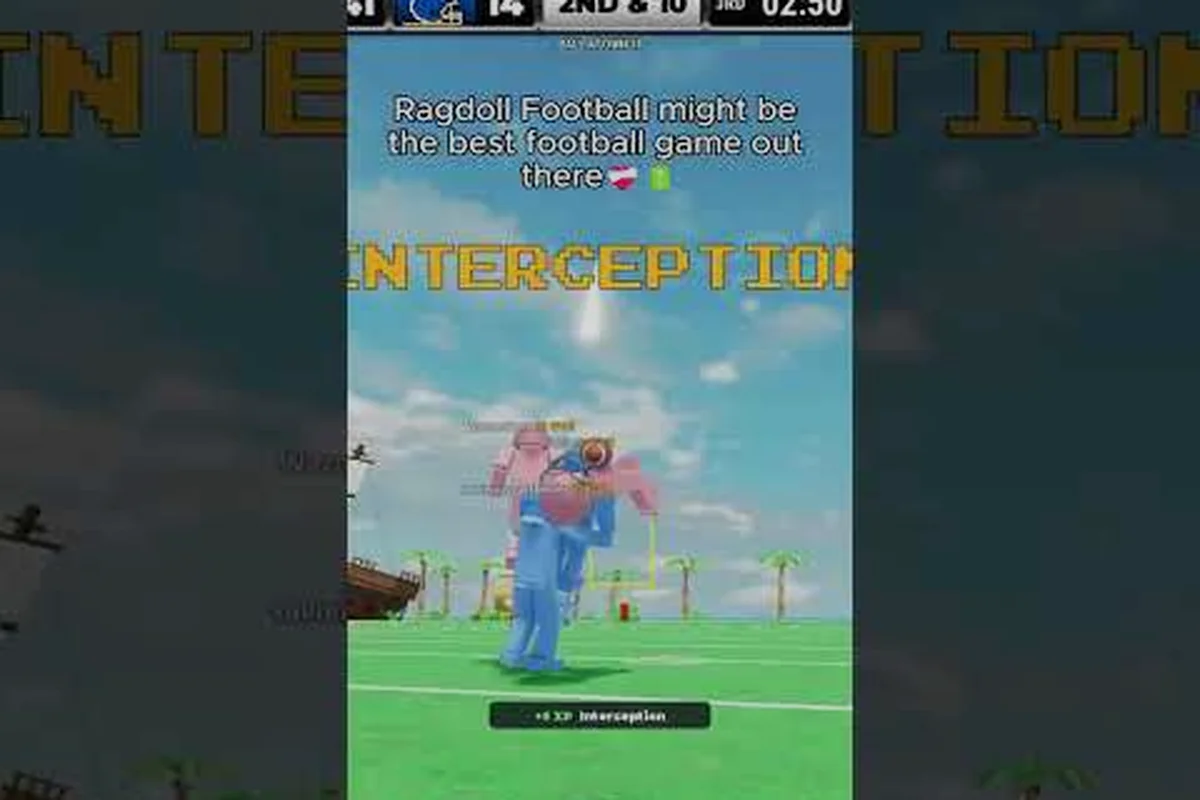
Ragdoll Football throws traditional football strategy out the window the moment you spawn, because every tackle, dive, and throw reacts to real physics instead of scripted animations. New players who walk into matches without a plan usually get folded by their own ragdoll limbs before halftime. This ragdoll football beginner tips guide breaks down the controls, the XP loop, and the little habits that separate a 60 OVR rookie from a 99 OVR carry.
The game launched publicly on September 18, 2026, and the community has already pushed past 1.55 million visits on the official Ragdoll Football Roblox page, so the matchmaking pool is deep and the skill gap is real. If you want to climb past the early plateau, the winning tips below cover the inputs, the positioning, and the XP farming that turn chaotic physics into controlled offense. Use this ragdoll football guide 2026 as a starting point, then layer practice on top of the fundamentals.
Ragdoll Football Controls and Inputs Every New Player Must Learn
Before you worry about formations or trick plays, you need a clean mental map of the controls, because every other decision in the game flows from how reliably you can execute an input under pressure. The PC scheme is the most documented and easiest to reference, but the same inputs map cleanly to console and mobile layouts.
Core PC Control Scheme
The default scheme on PC is built around WASD movement, which keeps your left hand on locomotion and your right hand on actions. Hold the action button to charge a throw, click to tackle, hike, or kick depending on context, and press X for dive, hand off, and cancel behaviors. V triggers a take-a-knee that ends the play safely, while right-click drag rotates the camera and the scroll wheel zooms in or out. Mastering these bindings is the first step in any ragdoll football pro guide, because flubbed inputs cost you yards and XP.
| Input | Action | When to Use It |
|---|---|---|
| WASD | Movement | Locomotion in open field, juking defenders |
| Space | Jump | Catching high throws, dodging low tackles |
| Left Click | Tackle / Hike / Kick | Defense on contact, snapping the ball, kicking on special teams |
| Hold Left Click | Throw (charge) | Passing under pressure, longer arms need longer holds |
| X | Dive / Hand Off / Cancel | Breaking tackles, pitching the ball, cancelling animations |
| V | Take a Knee | Running out the clock, avoiding a sack |
| Right Click Drag | Camera Rotate | Tracking a deep pass, surveying the field pre-snap |
| Scroll Wheel | Zoom | Reading the offense, finding open receivers downfield |
Mobile and Console Adjustments
Touch and controller players get a virtual stick or analog stick for movement, a tap-to-tackle button that mirrors the left click, and a swipe or hold gesture for the throw. The dive and hand off share a single face button on most controllers, which is where new players fumble the snap, so a helpful ragdoll football winning tip is to remap dive to a bumper if your layout allows it. The charge throw still requires a hold, so build the muscle memory early or you will underthrow every deep ball.
Why Controls Matter More Than Reflex
Physics-driven football punishes you for sloppy inputs in ways that traditional sports games rarely do, because a mistimed tackle launches your own body into orbit and a half-charged throw dies before it reaches the receiver. The fastest way to climb from the 60 OVR starting rating toward the 99 cap is to grind your inputs until they are second nature, then layer strategy on top. Players who chase tricks before they master movement lose more matches than they win, which is why every ragdoll football guide 2026 puts controls first.
How the XP and OVR System Drives Your Progression
Progression in this game is a closed loop, and understanding it is the difference between grinding for hours with no gains and stacking XL on every big play. The loop rewards aggressive, high-variance football, which is exactly the style beginners usually play by accident, so you can turn chaos into progression once you understand the math.
How XL and Big Plays Stack
Big plays are the only meaningful XP source, and the game tracks tackles, diving catches, long throws, kick returns, and broken tackles as separate events. A standard three-yard run barely moves the needle, while a diving catch on fourth down can double your XP bar in a single play. The community reports that combining two big plays on one drive, like a long pass followed by a broken tackle, is the fastest way to push toward the next OVR tier.
| Big Play Type | XL Yield (Approx.) | Notes |
|---|---|---|
| Short Run (1-3 yards) | 5-10 XL | Barely registers, mostly noise XP |
| Standard Catch (5-10 yards) | 15-25 XL | Solid baseline for receivers |
| Diving Catch | 40-60 XL | High skill, high reward |
| Long Throw (20+ yards) | 50-75 XL | Charge throw required |
| Broken Tackle | 30-45 XL | Dive at the right moment |
| Kick Return (15+ yards) | 60-80 XL | Special teams gold |
| Touchdown | 100-150 XL | Stacks with the play that scored |
OVR Tiers and What They Unlock
You start at a 60 OVR baseline, and every OVR tier you cross opens small bonuses to speed, strength, throw power, and tackle force. The community consensus is that each tier takes roughly 8-12 matches of focused big-play farming to clear, so plan a 30-minute session around 3-4 close games rather than 10 blowout losses. The cap sits at 99 OVR, and only a small percentage of the player base has reached it according to community data, which means every tier before that is a meaningful milestone.
How to Win in Ragdoll Football by Farming Big Plays
A common beginner mistake is playing conservatively to avoid turnovers, but turnovers happen in the physics engine whether you play scared or aggressive, and the XP system explicitly rewards the chaos. The smart play is to take calculated risks that maximize your chance of a big play, like throwing on third and long instead of punting, or attempting a diving catch instead of letting the ball hit the turf. If you want to learn how to win in ragdoll football on a tight schedule, the answer is to play fewer, higher-variance drives rather than a marathon of safe possessions.
Defense Positioning and Tackling Strategy for Beginners
Defense in a physics engine is less about reading the offense and more about controlling your body's momentum, because a lunging defender usually ends up sliding three yards past the ball carrier. The teams that hold opponents under 20 points every match all share a few positioning habits that beginners can copy immediately.
Read the Ball Carrier's Torso, Not the Limbs
Ragdoll limbs swing independently of the torso, so a defender chasing flailing arms will overcommit and whiff. Focus on the center of mass, which is where the actual movement vector is, and close the angle instead of chasing the limbs. A useful ragdoll football winning tip is to strafe perpendicular to the ball carrier at midfield, then commit to the tackle only when the torso is squared up.
Don't Spam the Tackle Button
Button mashing the tackle input triggers multiple low-impact hits that scatter the ball carrier rather than stopping him, and each missed tackle also exposes you to a counter hit. A single well-timed tackle that lands flush is worth three spammed ones, both in yards saved and in XP gained. According to community data, players who average 1.5 tackles per defensive drive consistently out-perform players who spam 5+ attempts.
Use the Camera to Scout Pre-Snap
Right-click drag on PC or the camera button on console gives you a wide view of the offense, and taking 2-3 seconds before the snap to identify the deepest receiver often decides the play. If you see three receivers deep, back off into a prevent shell; if you see a tight formation, crash the line. Defenders who skip the pre-snap read usually commit to the wrong gap and get gashed for 20 yards.
| Defensive Situation | Recommended Action | Common Mistake |
|---|---|---|
| Three receivers deep | Drop into prevent shell | Rushing the QB for a free release |
| Tight formation, no WR | Crash the line, X for dive tackle | Strafing too far back |
| Ball carrier breaking outside | Strafe and angle, do not dive early | Panic diving at the legs |
| Two-minute drill | Prevent shell, watch sidelines | All-out blitz, getting beat deep |
| Goal line stand | Stay low, spam tackle at torso | Diving at the head, bouncing over |
Rotate, Do Not Chase
A solo defender chasing the ball carrier across the field rarely makes the tackle, but rotating into the play from a 30-degree angle almost always does. The physics engine rewards players who maintain proper leverage, so even slower defenders can make the stop if they take good angles. Pair this with the ragdoll football mistakes to avoid guide to catch the positioning errors most rookies make on their first 20 matches.
Offense Playcalling, Passing, and the Diving Mechanic
Offense is where physics punishes you the hardest, because a poorly placed throw turns into an interception opportunity for the defender, and a mistimed dive hands the ball back to the other team. The good news is that the same physics engine that punishes mistakes also creates massive big-play opportunities, so offense is the fastest way to farm XP.
Charge Your Throws
Every throw requires a hold, and the charge time scales with distance, so a 5-yard out needs a short tap while a 40-yard bomb needs a full hold. New players almost always underthrow deep balls, which is why learning the throw charge is the single most important ragdoll football winning tip for any QB. If you underthrow consistently, the fix is not to aim higher, it is to hold the button longer and let the physics engine carry the ball.
Use the Dive to Extend Plays
The X button dive is a momentum tool, not just a broken-tackle move, because a well-timed dive at the end of a run adds 3-5 yards of forward progress. Diving at the wrong moment, however, flings your body sideways and stops your momentum dead. The trick is to dive only when a defender is already committed to the tackle, so your body sails through the contact instead of bouncing off it.
Mix Run and Pass to Keep the Defense Honest
Spam-running the same dive play works in the first two matches because defenders do not know the tendency, but the community reports that opponents adapt by the third drive and start crashing the line. A balanced attack that uses 60% run and 40% pass keeps the defense honest and opens up bigger plays on both sides. If you want a deeper breakdown of how playcalling fits into the bigger picture, the ragdoll football beginner guide covers route combinations and pre-snap reads in detail.
| Play Type | When to Call It | Risk vs. Reward |
|---|---|---|
| Dive run up the gut | Short yardage, goal line | Low risk, low XP |
| Outside run with WR block | 2nd and long | Medium risk, medium XP |
| Quick slant (5-10 yards) | 3rd and medium | Low risk, baseline XP |
| Deep post (25+ yards) | 2nd and 10+ | High risk, high XP |
| Hand off after fake dive | 1st and 10 | Medium risk, broken tackle XP |
| QB dive at the goal line | QB sneak attempts | High variance, big XP if it works |
Practice Drills, Solo Warm-Ups, and Building Consistency
Improvement comes from deliberate practice, not from grinding matches, because every match is full of variables you cannot control, and a 20-minute drill session often teaches more than an hour of matchmaking. Building a short warm-up routine before you queue into ranked or competitive modes is one of the most overlooked ragdoll football winning tips, because it locks in your inputs before the chaos starts.
Solo Drills You Can Run in 15 Minutes
Start with a five-minute throw-charge drill: stand at the 20-yard line, throw to a stationary target at the opposite 20, and focus on hitting the same spot with a consistent charge. Then spend five minutes on tackle timing, finding an AI ball carrier and practicing a single committed tackle per rep instead of spamming. Finish with five minutes of dive runs, alternating dives left, right, and forward to build muscle memory across all three vectors.
Warm Up Before Every Competitive Session
Cold-starting into a competitive match is the leading cause of early turnovers, because your inputs are sloppy and your reactions are slow. A 10-minute warm-up session before queuing raises your win rate noticeably according to community testing, which is why the ragdoll football duo guide recommends structured pre-match prep for any team that wants to climb.
Track Your Big Plays Per Match
Keep a simple mental count of how many big plays you generated per match, aiming for at least 6-8 by mid-season. Players who track their numbers naturally start playing for big plays instead of safe ones, which is the entire point of the XP system. This is also one of the easiest ways to apply ragdoll football winning tips in your very next session, because the data forces you to take the risks that the game rewards.
Advanced Habits That Separate Beginners From 90+ OVR Players
Once the basics click, the gap between a 60 OVR rookie and a 90+ OVR carry is almost entirely habit-based, because the inputs and the XP system stay the same across the whole OVR curve. The players who break into the top tier all share a small set of advanced habits that beginners can start practicing today.
Learn Two Roles, Master One
Trying to learn QB, RB, WR, and defense at the same time spreads your practice too thin, so pick one primary role to master and one secondary role to support. Most 90+ OVR players run a primary role and a backup role that complements it, like a QB who can also play receiver. This depth is also what makes a squad dangerous, and the best position to play in Ragdoll Football guide covers which roles pair best for solo queue and squad play.
Use the Camera Like a Coach
Top players tap the camera button constantly, checking the deep field, the sidelines, and the defensive shell before every snap, because information is the only edge you have in a physics engine. Players who play with a fixed camera angle miss open receivers, misread the defense, and end up making decisions based on the wrong frame.
Play the Long Game, Not the Single Match
A 20-point loss still gives you XP, big plays, and progression, so tilting after a bad first half is the fastest way to waste a session. The players who hit 90+ OVR treat every match as a practice rep for the next one, focusing on personal stat growth rather than the scoreboard. If you want a complete roadmap for climbing, the ragdoll football meta guide pulls all the systems together and shows you the order to optimize each one.
Frequently Asked Questions
What is the best way to farm XP in Ragdoll Football as a beginner?
The fastest XP grind is to stack big plays, especially diving catches, long throws, and kick returns, because standard short plays barely move the needle. Aim for 6-8 big plays per match, and prioritize high-variance plays over safe possession football. According to community data, kick returns and broken tackles give the best XP-per-minute ratio for solo queue players.
How do I stop getting ragdolled on every tackle?
Focus on the ball carrier's torso instead of the limbs, take a 30-degree angle, and commit to a single tackle instead of spamming the input. A clean, well-timed tackle that lands flush is worth three spammed ones, both in yards saved and in XP gained. Strafing perpendicular to the ball carrier before committing is the single most effective habit for new defenders.
What OVR should I aim for before queuing into competitive modes?
A good benchmark is 75 OVR, which is high enough to have the basic inputs down but low enough that you can still learn the meta by playing. Most players hit 75 within their first 15-20 hours if they focus on big plays instead of safe possession. Trying to climb past 60 by avoiding risks almost always backfires, because the XP system punishes conservative play.
Can I play Ragdoll Football on mobile or console, or is PC better?
All three platforms are fully supported, and the inputs map cleanly to touch, controller, and keyboard layouts. PC has the slight edge for competitive play because mouse aiming and keyboard movement are more precise, but mobile and console players can absolutely reach 90+ OVR with practice. The biggest mobile-specific tip is to remap the dive button to a comfortable position, because the default layout puts it in a spot that causes accidental presses.
How long does a typical Ragdoll Football match last?
A standard match runs 8-12 minutes depending on the scoring pace and how many timeouts each team takes, with the take-a-knee input available to run out the clock at the end of a half. The community prefers shorter, higher-scoring matches because they generate more big plays per minute, which feeds the XP loop. A 10-minute match with two big plays per team is generally more rewarding than a 15-minute slog of three-and-out drives.