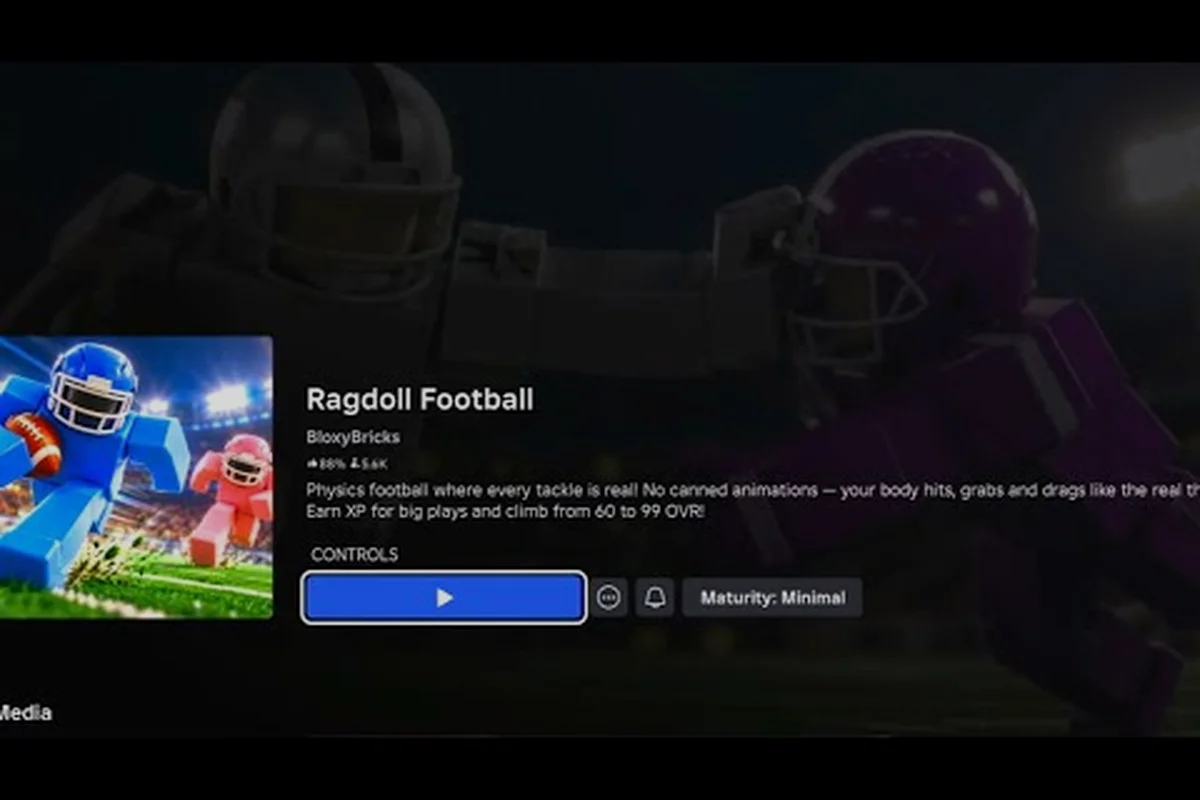
Stop letting offenses dictate the scoreboard. A locked-in Ragdoll Football defense wins more drives than any hot QB streak, because every forced incompletion, dropped catch, or goal-line stand hands the ball back to your offense with better field position. This guide breaks down the defensive side of the 7v7 format: how to read the hike, where to line up for touchback coverage, when to time a momentum hit, and which coverage shells shut down the most common route combos. Whether you queue solo or stack with a squad, the principles below translate directly into more stops, more turnovers, and more wins.
Reading the Hike and Pre-Snap Alignment in 7v7
Ragdoll Football compresses traditional gridiron reads into a tight 7v7 field, so the snap — the hike — becomes the single most important defensive decision point. As soon as the center moves the ball, every defender has roughly half a second to identify run, pass, or scramble. Pre-snap, the defense should already know the down-and-distance situation, the offensive formation, and where the strength of the play is likely to flow. The Wikipedia entry on the snap mechanic describes how the center's exchange frames every offensive decision, and the same principle drives defensive reads here: read the hike, read the QB's first step, then react.
Down-and-Distance Awareness
A first-and-10 is not the same defensive call as third-and-long. On early downs, offenses can lean on runs, designed rollouts, and short play-action fakes that punish aggressive coverage. On obvious passing downs, defenders can sell out on pass routes because the offense is unlikely to keep the ball on the ground. Always confirm the down before choosing your leverage.
| Down & Distance | Offensive Lean | Defensive Call | Coverage Shell |
|---|---|---|---|
| 1st & 10 | Run / play-action | Light box, 5 in coverage | Soft zone, two-deep |
| 2nd & 6-8 | Pass or balanced | 4 in coverage, spy QB | Cover 3 shell |
| 3rd & 5+ | Pure pass | Send pressure, 4 in coverage | Man or cover 2 |
| Goal line (inside 5) | Run-heavy | Stack the box | Tight man, no deep safety |
Formation Tells
Even in a 7v7 setup, offenses tip their hand through alignment. A tight bunch on one side often signals a rub route or quick screen. A single receiver split wide to the boundary usually means an isolation route that the QB will target if the defense overcommits to the middle. The defenders who climb into the higher win rates are the ones who glance at the formation, identify the strength, then shift their leverage before the hike.
Tackling, Momentum Hits, and the Catch Window
Tackling in Ragdoll Football is not the same as traditional football. The ragdoll physics engine means a body collision in mid-air can produce surprising bounces, awkward pileups, and momentum-driven knockbacks. Defenders who rely on shoulder-led contact often bounce off the carrier; defenders who learn to angle into the body and stack their momentum convert far more stops. The defensive line and linebacker roles discussed in the tight end and defensive line guide cover the box-side responsibilities that feed into the tackle equation, because the angle of approach decides whether the hit sticks or scatters.
The Momentum Hit Mechanic
A clean momentum hit happens when the defender is moving at the carrier at full sprint and times the click to land at chest height or below. Hits above the shoulders often phase through the carrier or send them flying past the defender, while hits aimed at the legs and hips tend to plant the ball carrier in place. Practice the timing in low-stakes scrimmage modes so the muscle memory is built before it counts.
The Catch Window and Deflection
Most interceptions happen because a defender got a hand into the catch window — the small airspace right at the receiver's hands when the ball arrives. Reaching in late is usually wasted; reaching in on the arrival frame is where the ball comes loose. Coverage defenders should track the QB's arm, not the receiver's eyes, because the ball leaves the hand on a consistent release point across all 7v7 plays.
| Defensive Action | Best Range | Failure Mode |
|---|---|---|
| Click-tackle (left) | 0.5-1.5m from carrier | Whiff if too close or too far |
| Jump deflection (space) | Same height as ball | Whiff if too early |
| Momentum hit | Sprint + 0.5m | Bounce off if moving slow |
| Click-tackle high | Above shoulder | Carrier stays upright |
| Click-tackle low | Hips and below | Carrier rolls through |
Coverage Shells and Possession-Stopping Routes
Every defensive stop is built on a coverage shell, and every shell is a tradeoff between short-route compression and deep-route vulnerability. The 7v7 format means a single blown coverage can turn into a touchdown, so choosing the right shell for the situation is half the battle. Player roles and coverage positions are mapped out for the standard shells, and the table below shows how each one behaves against the route combos you will see most often.
| Coverage Shell | Strong vs. | Weak vs. | Best Down |
|---|---|---|---|
| Cover 2 (two-deep) | Sideline fades, outs | Deep middle post | 1st & 2nd down |
| Cover 3 (three-deep) | Outside routes, one-receiver side | Curl/flat combos | 3rd & long |
| Cover 1 (man-free) | Vertical routes, speed | Mesh, rub routes | 2nd & short |
| Soft zone (prevent) | Deep shots | Quick slants, screens | 4th & long |
| Goal-line stack | Inside runs, QB sneaks | Outside pitch, fade | Goal line |
Reading the QB's Eyes
QBs in Ragdoll Football tend to lock onto their primary target for a beat too long. Defenders in man coverage should mirror the QB's head turn; defenders in zone should drift toward the side the QB is staring at, then break on the throw. Eye discipline is one of the few things the defense can do that the offense cannot easily counter, because it costs no stamina and no positioning.
Force the Take-a-Knee
If the defense holds a lead late, the offense often resorts to a take-a-knee to bleed the clock. Defenders should still rush the line, because a fumbled snap or a bad exchange can hand the ball back. Even when the play is designed to waste time, aggressive defense can produce a turnover that ends the game.
Touchback Positioning, Goal-Line Stands, and Field Position
Touchback positioning is one of the most underrated skills in Ragdoll Football defense. A well-timed touchback at the back of the end zone stalls an entire drive and flips the field. The mechanics, including the space-bar jump and click-tackle inputs, are detailed in the touchback controls reference, but the strategic layer is what wins games. Defenders who know when to concede the touchback versus when to attack the ball carrier can save two or three possessions per match.
When to Give the Touchback
If the returner is deep and the coverage team is still settling, the safer play is to take the touchback and start the offense at the 25-yard equivalent. Forcing a return into traffic with poorly set blocks almost always gives the returner a seam for a bigger play. The math favors the touchback in those situations.
When to Attack
If the returner drifts lazy or crowds the goal line looking for a touchback, the kicking team can sprint downhill and force a fumble or a downed ball inside the five. The Wikipedia end zone article describes how the scoring area governs these decisions, and the same boundary logic applies to touchback strategy: defenders either concede the space and reset, or sprint and risk the explosive return.
| Touchback Decision | Field Position | Risk | Reward |
|---|---|---|---|
| Take the touchback | Offense at ~25 | Low | Clean start |
| Attack the returner | Possible downed ball inside 5 | High (explosive return) | Goal-line stand opportunity |
| Pin with angle tackle | Touchback to sideline | Medium | Loss of 5-10 yards of return |
| Jump-punt pressure | Forced fumble chance | High | Instant turnover |
Goal-Line Stands
Inside the five, the math flips: every yard matters. Defenders should stack the box, play tight man, and refuse to give the inside lane. Goal-line stands win more games than they should because offenses try to get cute with fades and jump balls, both of which are low-percentage throws in tight coverage. The defender who plants a foot on the goal line and refuses to give ground is the defender who forces the turnover on downs.
Pressure Packages, Momentum Swings, and Win Conditions
Pressure is the great equalizer in any defensive scheme, and in 7v7 the pressure packages come down to timing and count. A four-man rush against five offensive linemen sounds risky, but in this format the linemen are slower to set, and a well-timed click-tackle can blow up the play before the QB plants. Bringing five is even better on obvious passing downs, because the leftover coverage can play matchup zone and force the QB to throw into traffic.
Momentum as a Defensive Resource
The momentum meter swings both ways. A single big hit can give the defense a temporary boost in collision force, which is why stacking momentum hits early in a drive pays off later. Conversely, a defense that whiffs on the first three tackles gives the offense a confidence edge and forces the defenders to chase. The first tackle of the drive is often the most important.
Forced Turnover Checklist
The defensive objective is simple: end the drive. A drive ends on a score, a turnover, a turnover on downs, or a punt. The defense can influence three of those four. Use this quick checklist on every snap to keep the priorities straight.
-
Read the hike first — identify run or pass before moving
-
Leverage to the formation strength — do not get caught flat-footed
-
Track the QB's eyes — break on the ball, not the receiver
-
Angle into the carrier — momentum beats shoulder contact
-
Win the catch window — one deflection can flip the drive
-
Stack momentum hits — early stops fuel late stops
-
Set the touchback correctly — concede when ahead, attack when close
Frequently Asked Questions
What is the best defensive shell for Ragdoll Football 7v7?
Cover 3 is the strongest default shell because it balances run support with deep coverage on the most common 7v7 route combos. Switch to Cover 1 man-free on third-and-long, and shift to a stacked goal-line look when the offense crosses the five. Mixing shells pre-snap is the fastest way to confuse the QB.
How do I time a momentum hit without bouncing off the carrier?
Build up sprint speed first, then click-tackle aimed at the carrier's hips or legs. Hits aimed at chest height or above tend to phase through the ragdoll model, while low hits plant the carrier. Practice the timing in a scrimmage lobby until the muscle memory takes over.
When should I concede a touchback instead of attacking the returner?
Concede when the returner is set deep and the coverage is still settling, because forcing a return into broken blocks usually gives up a bigger play. Attack when the returner is crowding the goal line or drifting lazy — that is when a downhill sprint can force a fumble or a downed ball inside the five.
What is the fastest way to force a turnover in Ragdoll Football?
Disrupting the catch window is the highest-percentage turnover play. Position the coverage defender one step inside the receiver's break, watch the QB's arm rather than the receiver's eyes, and reach in on the ball's arrival frame. Interceptions in 7v7 come from placement, not luck.
How does possession change the defensive game plan?
On long drives the defense should prioritize bend-don't-break shells that prevent big plays, while on short drives after a turnover the defense can sell out on pressure packages. The possession count also dictates risk tolerance: leading teams play soft zone and force the clock, trailing teams bring five or six and force the QB to throw.