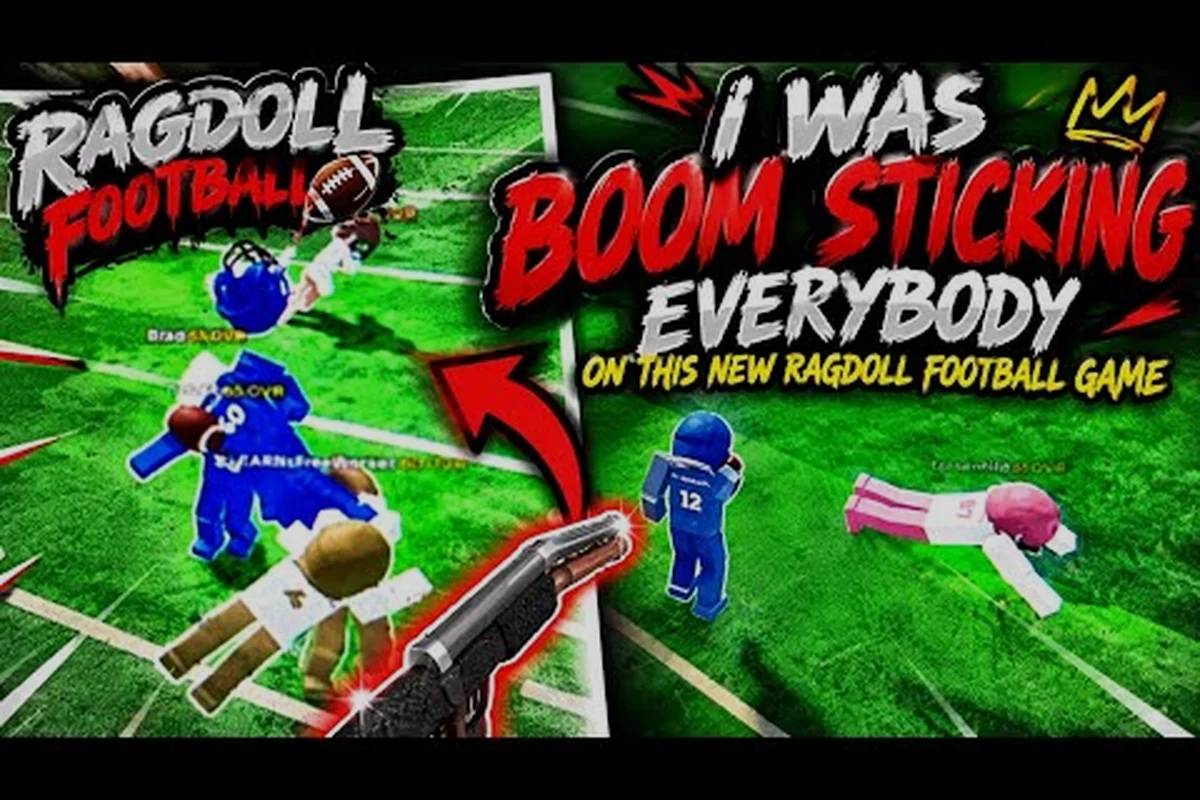
Every Ragdoll Football offensive drive begins with a single decision at the line: hand the ball off, keep it, or launch it through the air. The moment a quarterback picks up the snapped pigskin, a chain of physics-driven choices starts ticking, and mastering those choices is what separates a casual kickoff squad from a team that consistently produces a touchdown. Because the game leans on ragdoll momentum and flailing limbs rather than traditional ball trajectories, throwing in this title feels closer to launching a wobbling comet than threading a regulation spiral.
The Anatomy of a Ragdoll Football Throwing Play
Players who focus on the small variables, including aim stick pressure, body lean, and pre-snap receiver position, can turn a routine play into a multi-yard gain even when the defensive line closes in. The Wikipedia article on first down explains how a possession-based gridiron structure rewards sustained field position, which is exactly how Ragdoll Football's shorter 7v7 matches reward consistent throwing efficiency over raw scrambling.
| Throw Type | Typical Range | Best Window | Risk Profile |
|---|---|---|---|
| Quick Out | 5-8 yards | 0.5s after snap | Low interception risk |
| Mid Dig | 10-15 yards | 1.0s after snap | Medium safety exposure |
| Deep Post | 20-30 yards | 1.5-2.0s after snap | High turnover risk |
| Lob Touchdown | 25-35 yards | 2.0s after snap | Highest reward, lowest completion % |
The table above reflects ranges reported by community testing on public servers, where the in-game physics engine applies drag, gravity, and ragdoll limb collision to every pass. Because each receiver reacts to the ball based on personal weight and flailing patterns, the same throw can land perfectly on one drive and skid off-target on the next, which is why throwing repetition matters more than memorizing one perfect aim point.
Passing Arcs and Aiming Mechanics
A passing arc in Ragdoll Football is not a flat laser; it is a parabolic curve that the ball traces between the quarterback's hand and the receiver's catch box. Holding the aim stick higher adds a steep lofts that buys extra time against a rushing defender, while keeping the stick low fires a quick dart that arrives before any coverage can close. Players who want consistent passing efficiency need to learn which arc to select for each route depth and defensive look.
Lead the Receiver, Not the Footprint
New quarterbacks often aim directly at where the receiver is standing, but because the ragdoll models are constantly wobbling, the player who will catch the ball is usually one or two steps ahead of the visible sprite. A good rule of thumb is to add a half-step lead on short routes and a full step lead on deep routes, then watch how the receiver's momentum adjusts the catch animation. This tiny offset, repeated across dozens of throws, is what builds reliable completion percentages.
Use Body Lean to Shape the Throw
Tapping the strafe button while releasing the ball tilts the throw angle away from the nearest defender, which can swing a would-be interception into a sideline completion. Body lean does not change the arc dramatically, but it does shift the ball's lateral exit point, and on tight red-zone throws that small shift often makes the difference between a touchdown and a batted-down pass. Practice this lean-and-fire motion during warm-up drives so it becomes muscle memory once the pressure of a tied score sets in.
Ragdoll Football Kicking and Field Geometry
Kicking operates under a different rule set than throwing, because the kicker cannot move freely during the wind-up and the ball's trajectory is shaped by a power meter rather than an aim stick. The meter fills as the kicker holds the kick button, and releasing at the wrong moment produces a weak squib or a towering punt that hands the opponent excellent field position. Mastering when to release is the single biggest factor in scoring kickoff touchbacks and clutch field goals, and it complements throwing perfectly because the same field awareness applies to both phases.
| Kick Type | Power Meter Stop | Typical Outcome |
|---|---|---|
| Squib | 20-30% | Short, low kickoff; opponent starts near midfield |
| Standard | 55-70% | Medium-depth kickoff; midfield to 35-yard line |
| Touchback | 80-90% | Ball lands in end zone; offense starts at 25-yard line |
| Field Goal | 65-75% | Successful kicks under 30 yards |
| Long Field Goal | 85-95% | Successful kicks 30-45 yards; high miss risk |
Players who want to weaponize kicking should remember that the angle meter, usually a thin arc above the kicker, is what determines left-right accuracy while the power meter controls distance. Community testing suggests that a perfectly centered angle with a touchback-level power produces the most reliable kickoff results, because deviation in either direction often pushes the ball out of bounds and grants the opponent favorable starting position.
The Snap, the Hike, and Pre-Snap Reads
Every play begins with the snap, sometimes called the hike, where the center pushes the ball backward into the quarterback's hands. The Wikipedia entry on the gridiron football snap describes how this exchange is the first decision point of any possession, and Ragdoll Football treats it the same way. Once the ball is in the quarterback's hands, the offense has roughly one second to read the defense before the pass rush collapses the pocket.
Reading the Safety Before the Throw
The safety position in Ragdoll Football tends to hover a few yards behind the linebackers, and the safety's body lean is a strong tell for which coverage shell the defense is running. A safety leaning toward the line of scrimmage usually signals a blitz or run-focused front, while a safety sitting deep and square hints at a two-deep zone that punishes deep throws. Quarterbacks who glance at the safety before each snap routinely pick up the open hole in the zone and convert it into a chain-moving completion.
Quick-Audibles at the Line
Because the ragdoll animation system is unpredictable, calling an audible at the line is a high-risk but high-reward tool. The offense can flip from a run play to a quick pass if the defensive front shows weakness, but the quarterback loses half a second of throw time to the audible animation. That lost time is usually fine against a passive front, yet it becomes a sack against an aggressive blitz, so reserve audibles for obvious defensive mismatches rather than habitually swapping every snap.
Ragdoll Football Scoring and Touchdown Strategy
Scoring in Ragdoll Football is concentrated around a single high-value event: crossing the goal line with the ball in hand, which registers as a touchdown. According to the Wikipedia article on the end zone, this scoring area is the decisive boundary in any gridiron game, and defending your own end zone while attacking the opponent's end zone is the central tension of every match. Drives that stall near the 10-yard line often force a risky fourth-down throw, which is why consistent red-zone efficiency matters more than long-bomb yardage.
| Scoring Event | Point Value | Trigger Condition |
|---|---|---|
| Touchdown | 6 points | Ball crosses opponent's goal line |
| Extra Point Kick | 1 point | Kick through uprights after touchdown |
| Safety | 2 points | Tackle opponent in their own end zone |
| Two-Point Conversion | 2 points | Pass or run from 3-yard line after touchdown |
| Field Goal | 3 points | Kick through uprights during regular play |
Red-Zone Passing Windows
Inside the 20-yard line, the field compresses and defensive coverage tightens, so the windows for a successful throw shrink to a fraction of a second. Many offenses solve this problem by running quick slants and pick plays that free a receiver near the goal line, because these routes take advantage of the ragdoll collision system, which often creates natural picks when two players' limbs tangle. A well-timed slant near the 5-yard line routinely produces a clean touchdown when the defense overplays the boundary.
Kickoff Coverage and Hidden Yardage
Kickoff coverage is an underrated source of scoring leverage, because a well-covered kick forces the returner to start deep in their own territory, which shortens the opponent's playbook. A squib kick that dies at the 40-yard line might look weak, but it often forces a three-and-out that hands the offense a short field and an easy scoring chance on the following drive. Treating every kickoff as a chance to gain five or ten hidden yards is what elite teams do between touchdowns.
Offensive Drive Construction and Clock Management
Building a scoring drive in Ragdoll Football is a math problem wrapped in a physics problem. The offense has a limited number of downs to advance the ball, and each throw, handoff, or kickoff burns clock while also moving the chains. Teams that understand the down-and-distance math — first-down aggressiveness, second-down conversion routes, and third-down shot plays — tend to score more consistently than teams that simply try to win every snap in isolation.
| Down | Recommended Aggression | Risk vs. Reward |
|---|---|---|
| 1st Down | High — test coverage | Gains 5-8 yards, low turnover risk |
| 2nd Down | Medium — situational | Run or pass based on yards needed |
| 3rd Down | High — must convert | Medium risk, conversion extends drive |
| 4th Down | Conditional — go for it near midfield | High risk, but extends drive cheaply |
Two-Minute Drill Timing
The two-minute drill before halftime or the end of a close game is where clock management and passing efficiency collide. Quarterbacks who fire quick outs on first down, take a deep shot on second down, and then use the boundary to step out of bounds on third down routinely burn 30-40 seconds while still advancing the ball. The key is to avoid sacks, because a sack not only loses yards but also stops the clock, which hands the defense a free timeout and crushes the drive's tempo.
Empty-Backfield Five-Wide Sets
When the offense needs a quick touchdown with limited time remaining, empty-backfield five-wide sets put every eligible receiver on the line and force the defense to cover the full width of the field. The trade-off is that the quarterback has no check-down option, so a broken play means a sack or a throwaway. Despite the risk, five-wide sets produce the highest touchdown-per-minute rate in community data because they maximize the chance of finding a single mismatch on a deep route.
Common Throwing Mistakes and Fixes
Even experienced players fall into habits that cost their team a touchdown or, worse, a turnover. Recognizing these mistakes early and replacing them with cleaner mechanics is the fastest path to a higher completion percentage and a more reliable offense. Below are the patterns that show up most often in community match data and the simple adjustments that fix them.
-
Throwing off the back foot: stepping into the throw adds 10-15% distance and accuracy; backing away shortens the arc and invites deflections.
-
Aiming at the wrong receiver's body: aim for the catch box, which sits slightly above the hip and ahead of the chest, especially on deep routes.
-
Holding the aim stick too long: every extra second spent aiming also gives the pass rush another second to reach the quarterback.
-
Ignoring the safety: failing to read the pre-snap safety leads to throws directly into double coverage, which is the top cause of interceptions.
-
Forcing throws into traffic: a throwaway on third down preserves the drive; a forced throw into a tight window often ends the possession.
Adjusting these five patterns typically lifts a player's completion percentage by 10-15 percentage points within a few matches, and the improvement compounds when the offense also fixes its snap timing and route depth. Players who want a broader review of overall team strategy can pair these throwing fixes with the team's player-role coverage in the Ragdoll Football player roles overview, which explains how each position supports the throwing game.
Frequently Asked Questions
What is the easiest way to start a passing play in Ragdoll Football?
Pick a quick-out or slant route on first down, hold the aim stick slightly above horizontal, and lead the receiver by half a step. This combination produces a short, catchable throw that almost always gains positive yards and sets up second down with manageable distance.
How do I score a touchdown consistently in the red zone?
Run quick slants and pick plays that exploit the ragdoll collision system near the goal line, because tangling limbs create natural picks. A well-timed slant from the slot receiver routinely frees a clean path into the end zone against most defensive looks.
Should I kick a field goal or go for it on fourth down?
Go for it on fourth down when the offense is inside the opponent's 10-yard line or when the field goal kicker has less than 65% accuracy from that range. Kick field goals only when the yardage is short and the kicker's track record against that defensive pressure is solid.
How can I improve my kickoff coverage as an offense?
Aim for touchbacks when the kicker has an 80% or higher power meter, and switch to squibs when the wind conditions or the kicker's fatigue reduces power. Coverage lanes matter more than raw distance, so coordinate the front-line blockers to funnel the returner toward the sideline.
Does Ragdoll Football throwing work the same on every server?
Most throwing and kicking physics are consistent across public servers, though community testing suggests minor variations in ragdoll weight and gravity between custom lobbies. Always run a few warm-up throws when joining a new server so the timing differences feel familiar before a competitive drive begins.