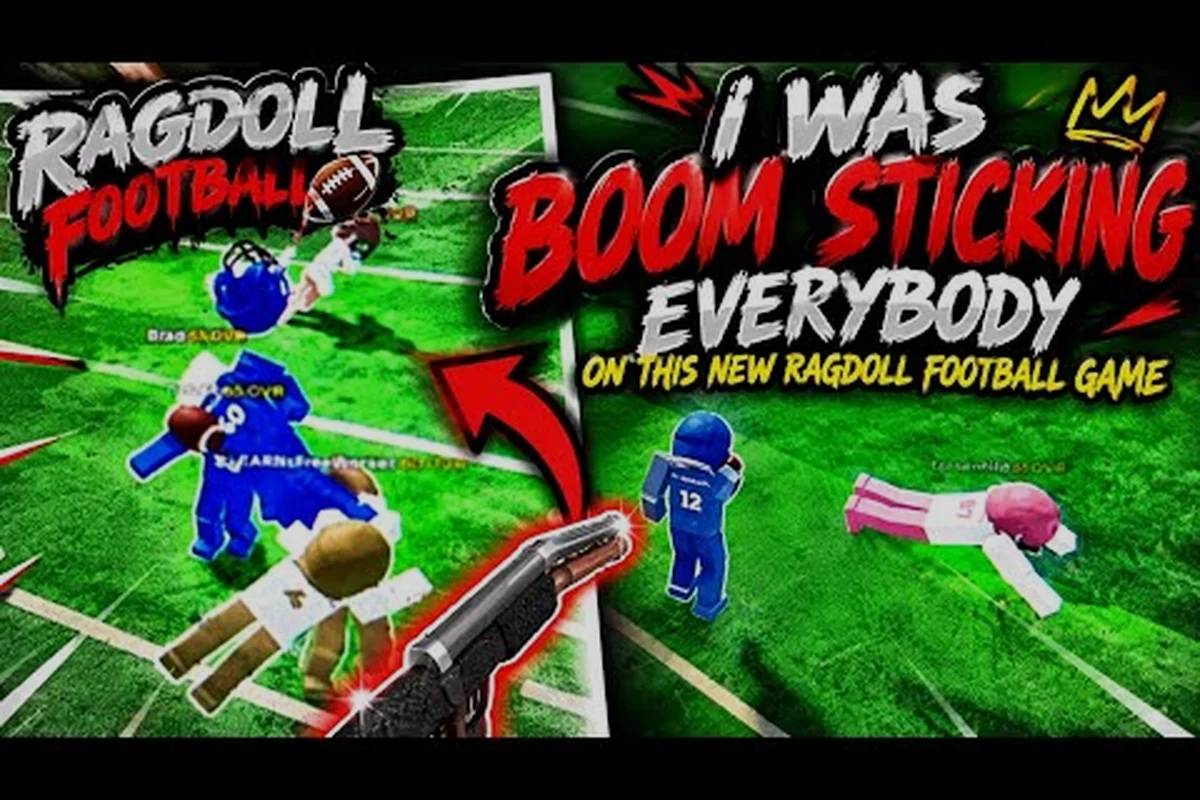
The Ragdoll Football hand off is not a fixed animation you can spam — it is a live body-to-body transfer shaped by the game's physics engine, and that single mechanic decides whether your offense moves the chains or chokes on third down. Every snap begins with a hand off to the running back, and because the ball carrier's limbs react to momentum, contact, and angle, the result looks different on every play. Understanding that contrast is the difference between racking up big plays and watching your drive stall inside your own 20.
Reading the Ragdoll Football Hand Off: Why Physics Changes Every Snap
Roblox football titles historically relied on canned tackle and stiff-arm animations, which made outcomes feel scripted. Ragdoll Football drops those scripts in favor of a no-canned-animations model, so jukes, dives, fumbles, and broken tackles emerge from real collision math rather than trigger frames. That design choice flows into the Ragdoll Football hand off itself: the mesh of the quarterback and the mesh of the back exchange the ball, and if either ragdoll is off-balance, the handoff can wobble, pop loose, or trigger a hitstick the moment a defender arrives. Reported by players across the community, this is the mechanic most newcomers underestimate when they first queue into a match.
For new players, the priority is to learn the timing window of the handoff, the spacing between QB and back, and the way the physics engine punishes early or late exchanges. For veterans, the same system is a source of cheese plays and highlight clips because the same physics that cause fumbles also produce broken ankles, diving catches, and walk-off touchdowns. This guide walks through the core hand off, the game modes where it shines, the match sizes that change its tempo, and the OVR payoff you earn when you turn clean handoffs into big plays. If you want a broader view of how the input layer feeds into the ragdoll simulation, the Ragdoll Football controller support guide breaks down the exact button mapping for hand off, dive, and take a knee.
Core Mechanics: How the Hand Off Actually Behaves
The Ragdoll Football hand off is governed by three overlapping systems — mesh contact, momentum transfer, and tackle resolution — and each one can turn a routine play into a disaster or a highlight. Below is a breakdown of the mechanic the way experienced players describe it on community clips and Discord threads.
Mesh Contact and the Ball Exchange
When the QB initiates a hand off, the game checks whether the QB's hand mesh and the running back's torso mesh are within a tight tolerance window. Too far apart, and the ball is fumbled on the spot, recovered by the closest defender. Too close, and the handoff is clean, but the two ragdolls briefly occupy the same collision volume, which can pop the back upward in a weird arc the physics engine then has to resolve.
| Variable | Effect on Hand Off | Risk if Misused |
|---|---|---|
| Spacing | Determines if the ball reaches the back cleanly | Fumble, pop-up, or stuck mesh |
| QB momentum | Affects how the back is pushed on contact | Back gets knocked forward into traffic |
| Back lean angle | Changes how the back absorbs the ball | Stumbles into defender's hit radius |
| Defender proximity | Triggers a hitstick during the exchange | Ball pops loose mid-handoff |
Momentum Transfer and Broken Tackles
Once the ball is in the back's hands, the physics engine treats the carrier as a single rigid body with arms, legs, and a torso that all react independently to force. A sprinting back who cuts sharply will shed a diving tackler because the defender's mass is still moving forward while the back's mass has already redirected. A back who runs straight into a cluster of defenders will crumple because every collision adds energy into the same frame, and the ragdoll collapses under accumulated force.
The big plays that show up in highlight reels all rely on the same principle: redirect momentum before contact, not after. A stiff-arm works because the back's arm extends into the defender's chest and pushes mass away. A juke works because the back's hips swing one way while the legs cut the other, dragging the defender's momentum with them. None of this is scripted — it is the physics engine resolving body geometry against a moving opponent in real time.
Hitstick Window and Fumble Risk
Defenders have a small but punishing hitstick window during and just after the hand off. If a defender collides with the ball carrier inside that window, the game adds extra impulse to the collision, and the ball is more likely to pop out. Community clips on YouTube show this repeatedly: a clean handoff into a lane looks safe, then a linebacker comes downhill at the right angle, and the ball flies loose. The counter is to time the handoff so the back has already cleared the mesh window before any defender is in range, or to hand off into a gap the defense has vacated.
Game Modes and Match Sizes: Where the Hand Off Shines
Not every game mode treats the Ragdoll Football hand off the same way, and the match size you queue into changes how aggressive you can be with the exchange. Below is a comparison of the modes the community plays most often, based on player reports and the modes visible in the public Roblox listing.
| Game Mode | Match Size | Hand Off Tempo | Big Play Frequency |
|---|---|---|---|
| 5v5 Quick Match | Small | Fast, tight exchanges | High — one broken tackle often scores |
| 7v7 Standard | Medium | Balanced, normal pocket | Medium — chains of 3-4 plays per drive |
| 11v11 Full Field | Large | Slow, complex reads | Low per play, high per drive |
| Scrimmage | 1v1 to 5v5 | Custom, sandbox-style | Variable — used to test routes |
5v5 Quick Match and the Burst Economy
In 5v5, every player is on the field for both sides of the ball, which means defenders arrive at the line of scrimmage fast and the pocket collapses quickly. The hand off has to be fast and decisive, and a half-second delay is the difference between a 12-yard gain and a fumble. Big plays are frequent because the field is short and one broken tackle is usually enough to reach the end zone. The community treats 5v5 as the mode for practicing the handoff's timing window because the feedback loop is so tight.
7v7 Standard and the Drive Economy
7v7 is the most balanced match size for learning to chain plays together. There is enough room for a play-action fake, a screen to the back, or a delayed hand off, but the defense still has enough bodies to punish bad reads. The hand off tempo here rewards patience: the QB fakes, reads the linebacker, then hands off into the gap the linebacker vacated. Big plays still happen, but they tend to come from scheme rather than from a single broken tackle, which is why 7v7 is the preferred mode for OVR grinding runs.
11v11 Full Field and the Possession Economy
11v11 matches turn the hand off into a chess move. The defense has enough bodies to cover every gap, and the offense has to grind 8-10 plays per drive to score. The hand off tempo is slow because the QB needs to read the safeties and the back needs to wait for the play to develop. Big plays are rare per snap but common per drive, especially when a tired defense starts leaking leverage on fourth-quarter drives. Veterans tend to live in 11v11 because the OVR XP per scoring drive is the highest in the game.
Scrimmage and the Lab Economy
Scrimmage mode lets you load into a small-sided match with custom rules, and it is where the community goes to test the hand off's spacing, the dive button timing, and the take-a-knee animation. If you want a deeper breakdown of how to join a specific match type and which server population you should target at each hour, the Ragdoll Football servers explained guide maps the server browser to the match sizes above.
Building Big Plays from the Hand Off
The Ragdoll Football hand off is the seed of every big play, but turning that seed into a 40-yard touchdown requires a few layered techniques. Below is the order of operations experienced players use to convert a clean handoff into a chain-breaking gain.
Step 1: Pre-Snap Read
Before you even call the play, look at the defensive front. If the defense has five or more defenders on the line, expect a blitz and hand off to the back as quickly as possible. If the defense has four or fewer, you have time to fake and read. The physics engine punishes indecision, so the pre-snap read decides the hand off tempo before the ball is snapped.
Step 2: Mesh Timing
The handoff mesh is cleanest when the QB and the back are moving in the same direction at the same speed. A back who is still decelerating from the start of the play will pop the ball upward, and a back who is already sprinting will outrun the QB's reach. The sweet spot is a back who is at 70-80% of top speed when the QB extends the ball.
Step 3: Cut Angle Selection
Once the back has the ball, the next decision is which direction to cut. The physics engine rewards cuts that change the back's direction by 90 degrees or more, because that sharp angle is what sheds a defender's momentum. Cuts of less than 45 degrees tend to drag the defender with the back, which leads to a gang tackle and a short gain.
Step 4: Contact Management
Big plays rarely happen without contact. The trick is to choose which contact to take. A back who lowers his shoulder into a single defender usually loses the collision because the defender's mass is also moving forward. A back who initiates a stiff-arm, a spin, or a dive at the right moment redirects that collision energy into something productive. Community clips on YouTube — including Johnwitta9's hand off and big play montage — show this pattern repeatedly: the cleanest handoffs lead to broken ankles only when the back commits to a redirect before contact, not after.
Step 5: Take a Knee When the Drive Is Won
When the clock is winding down and you have the lead, the right move is to take a knee rather than run another hand off. The take-a-knee animation drains the clock safely and protects your OVR from injury risk. According to community testing, kneels also count as a low-XP play action but preserve drive tempo, so use them only when the game is effectively over.
| Play Phase | Primary Action | Physics Engine Behavior |
|---|---|---|
| Pre-snap | Identify blitz vs base defense | Predicts collision density at mesh |
| Mesh | Hand off at 70-80% back speed | Cleanest ball transfer window |
| Cut | Redirect by 90+ degrees | Sheds defender momentum |
| Contact | Initiate stiff-arm, spin, or dive | Converts collision into forward motion |
| Victory | Take a knee to drain clock | Closes drive without injury risk |
Common Hand Off Mistakes and How to Fix Them
Even experienced players fall into habits that cost yards, and most of those habits come from fighting the physics engine instead of working with it. Below is a quick reference for the mistakes that show up most often in community clip reviews and the fixes that turn those mistakes into big plays.
| Mistake | Why It Hurts | Fix |
|---|---|---|
| Handing off to a stationary back | Ball pops up, easy fumble | Wait for back to reach 70-80% speed |
| Handoff into traffic | Hitstick window opens on the back | Read the linebacker, hand off to the vacated gap |
| Cutting less than 45 degrees | Defender rides the cut into the tackle | Commit to 90+ degree redirect before contact |
| Running straight at a cluster | Mass collision crumples the back | Bounce outside, use the sideline as a second defender |
| Skipping the take-a-knee | Burns clock and risks fumble | Kneel with under 40 seconds and a lead |
Mistake 1: Handing Off to a Stationary Back
The most common error new players make is handing off before the back has built any momentum. The physics engine treats the back as a static mesh in that frame, so the QB's hand pushes the back over, the ball pops upward, and a nearby defender recovers it for a turnover. The fix is patience: take the snap, take a one-step drop, and wait for the back to clear the mesh before extending the ball.
Mistake 2: Handoff into a Loaded Gap
The second most common error is handing off into the gap the defense is filling. Even a clean mesh becomes a fumble if a linebacker is arriving at full speed the moment the back touches the ball. The fix is to read the linebackers pre-snap, identify the gap they are vacating, and hand off into that gap. The physics engine rewards this because the back arrives at the line of scrimmage with a free lane and a head of steam.
Mistake 3: Overcommitting to the Cut
Once the back has the ball, the temptation is to juke three or four times in a row. Each juke burns stamina and shifts the back's mass in a new direction, and the physics engine cannot keep up with rapid redirects. The result is a back who stumbles into the defender rather than away from him. The fix is one decisive cut, then acceleration upfield.
Mistake 4: Forgetting the Sideline
The sideline is a free defender. A back who bounces the run to the outside uses the boundary to shrink the defender's angle and force a one-on-one tackle. The physics engine resolves sideline traps cleanly because the boundary acts as an immovable wall, and any collision with it adds energy back into the back's forward motion. Community clips repeatedly show that bounce-out runs produce more big plays than inside runs in 5v5 and 7v7 matches.
Linking Hand Off Mastery to Long-Term OVR Progression
The Ragdoll Football hand off is not just a per-play mechanic — it is the engine that drives your OVR climb from 60 to 99. Every clean handoff that leads to a big play feeds XP into your player card, and the rate of that XP is the difference between reaching the OVR cap in a single season and grinding for months. For a full breakdown of the XP curve and the fastest routes to the OVR cap, the Ragdoll Football OVR increase guide maps XP-per-play to the hand off patterns above.
The math is simple: a drive that includes three clean handoffs, one broken tackle, and a touchdown yields more XP than a drive that includes five incomplete passes. The hand off is the highest-XP play in the game because it produces the most contact events, and contact events are what the physics engine rewards with momentum, broken tackles, and highlight plays. That is why veterans queue into 11v11 matches and grind out long drives: the XP per minute is higher when the hand off is the focal point of the offense.
For endgame players who have already hit the OVR cap and want to refine the last few percentage points, the Ragdoll Football endgame progression guide breaks down the late-game hand off patterns that separate 99-OVR players from 95-OVR players. Most of those patterns come down to mesh timing and cut angle — the same two variables that decide whether a hand off is a fumble or a 40-yard gain in 5v5 quick matches.
The big plays that show up on highlight reels — diving catches, broken ankles, walk-off touchdowns — all start with the same mechanic: a clean hand off that the defense cannot read in time. Mastering the handoff is the foundation of the entire OVR climb, and the physics engine rewards that mastery on every snap. If you want to see the mechanic in action, the community has collected dozens of clips that show the exact handoff patterns described above, including Jaxdabearsfan's best Ragdoll Football moments compilation, which is a useful visual reference for the spacing and cut angles that produce the biggest plays.
Frequently Asked Questions
What makes the Ragdoll Football hand off different from a normal handoff?
The hand off in Ragdoll Football is a live physics interaction between the QB and the running back rather than a canned animation, which means spacing, momentum, and defender proximity all change the outcome on every snap. A clean mesh produces a stable ball transfer, while a bad mesh can fumble or pop the ball upward. The no-canned-animations design is what makes the same handoff look completely different across two consecutive plays.
How does match size change the hand off tempo?
Small match sizes like 5v5 force fast, decisive handoffs because defenders arrive at the mesh quickly, while larger match sizes like 11v11 reward slow, patient reads because the defense has more bodies to cover every gap. The hand off tempo scales with the number of players on the field, which is why the same play call feels rushed in 5v5 and relaxed in 11v11.
When should I take a knee instead of running another hand off?
Take a knee when you have the lead, the clock is under 40 seconds, and the game is effectively over. Kneeling drains the clock safely and avoids the fumble risk that comes with a contested handoff into a stacked defense. According to community testing, kneels count as low-XP plays but protect drive tempo, so use them only in victory formation scenarios.
Do big plays from clean handoffs actually boost OVR XP?
Yes, scoring drives that begin with a clean handoff and include at least one broken tackle yield more XP per drive than drives built on passing plays. The physics engine rewards contact events, and the handoff is the play that produces the most contact. For a full breakdown of the XP curve, the OVR increase guide maps XP-per-play to the specific hand off patterns that produce the biggest gains.
Which game mode is best for practicing the hand off?
5v5 Quick Match is the best practice mode because the feedback loop is tight, the field is short, and one broken tackle often scores. Scrimmage is a close second because it lets you reset the same play repeatedly with custom rules. Veterans move to 7v7 once the timing window is automatic, and to 11v11 once the pre-snap reads become second nature.